
In the ever-evolving world of digital advertising, businesses often face a crucial question: should I invest in Google Ads or Facebook Ads? Both platforms dominate the online marketing space and are powerful tools for driving traffic, generating leads, and increasing sales. However, their strengths lie in different areas, and the right choice depends on your goals, audience, and budget.
In this article, we’ll compare Google Ads vs. Facebook Ads in terms of targeting, costs, ROI, and reach—helping you choose the best PPC strategy for your business.
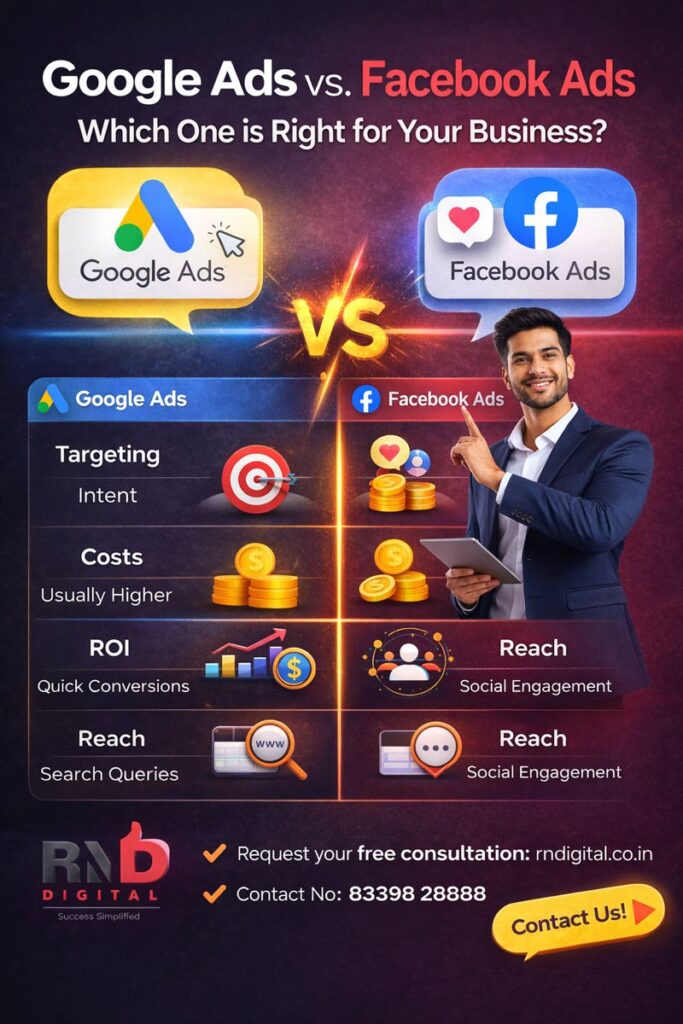
1. Targeting: Intent vs. Interests
The most significant difference between Google Ads and Facebook Ads is how they target your audience.
- Google Ads uses keyword-based targeting. Your ads appear when users actively search for a product, service, or solution. This means you’re reaching people with high purchase intent—perfect for driving quick conversions.
- Facebook Ads relies on interest and behavior targeting. You can create detailed audience segments based on demographics, hobbies, behaviors, and online activity. This is ideal for brand awareness and reaching potential customers who may not yet be actively searching for your product.
2. Costs: Which Is More Budget-Friendly?
When it comes to ad spend, Cost Per Click (CPC) and Cost Per Thousand Impressions (CPM) vary between the two platforms:
- Google Ads often has higher CPC rates for competitive keywords, especially in industries like finance, insurance, and legal services. However, these clicks usually come from high-intent users, which can justify the higher price.
- Facebook Ads generally offer lower CPC and CPM, making them more cost-effective for audience-building campaigns, remarketing, and brand storytelling.
3. ROI: Which Delivers Better Results?
Return on investment depends largely on your campaign objectives:
- Google Ads can provide immediate sales and leads by targeting users ready to make a purchase.
- Facebook Ads excels at nurturing prospects, building brand loyalty, and creating long-term customer relationships through consistent engagement.
Many businesses find success by using both—Google for high-intent conversions and Facebook for top-of-funnel brand awareness.
4. Reach: Search Queries vs. Social Engagement
- Google processes billions of search queries daily, giving you access to a massive audience actively looking for solutions.
- Facebook offers unmatched social reach, allowing you to visually engage with your audience through images, videos, and interactive formats.
Your choice depends on whether you want to capture existing demand or create new interest.
Final Thoughts
Both Google Ads and Facebook Ads have unique strengths, and the best approach often involves combining them for maximum impact. Google Ads captures users who are ready to buy, while Facebook Ads builds interest and trust over time.
If you’re unsure which platform is right for your business, our team at RND Digital can help you create a data-driven PPC strategy tailored to your goals.
✅ Request your free ad platform consultation today
Learn more about our https://rnddigital.co.in/
Explore the official Google Ads Help Center
